The northern notebook
Before the luxury: Rolls-Royce's Manchester beginnings
Two surnames, an introduction and a car with a very small engine by later standards.
Before the badge became a shorthand for luxury, someone had to build the car and someone had to sell it. Manchester brought the two jobs together.
There are two names on the badge, and they belonged to people doing rather different jobs.
Henry Royce was the engineer. Charles Rolls sold cars. Their introduction brought a manufacturer together with someone who knew how to find customers, which is a useful beginning for any car company, however grand its later reputation.
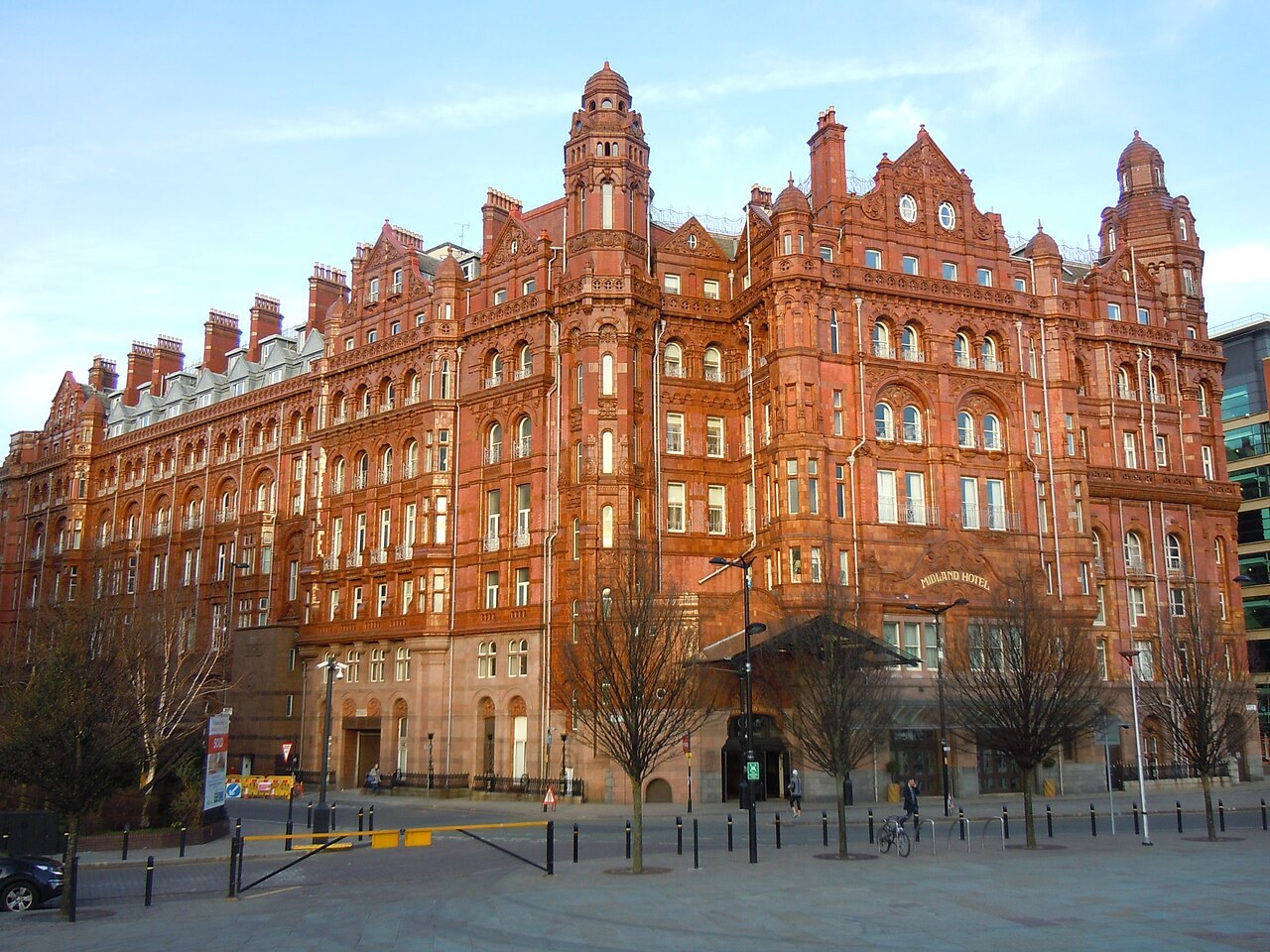
Rolls-Royce's own account places their first meeting at the Midland Hotel in Manchester on 4 May 1904. Henry Edmunds, a mutual acquaintance, arranged it. The National Motor Museum repeats the account and records that Rolls agreed to sell all the cars Royce could make. The museum's account of the partnership
It is tempting to furnish the scene: the table, the weather outside, the moment when one man realised what the other could offer. The agreement is interesting enough without supplying dialogue that nobody has given us.
The salesman knew his cars
Rolls had studied mechanical engineering at Cambridge and became an enthusiastic motorist. His dealership, CS Rolls & Co., imported French Peugeots and Belgian Minervas. He had a practical interest in finding a British car he could sell.
Royce had come to engineering by a different route, including a railway apprenticeship and work in electrical engineering. By April 1904 he had driven his first Royce 10 hp car. These are useful details to hold onto: the partnership connected two people with knowledge of machinery, even if their backgrounds and daily work differed. How Rolls met Royce
The badge makes the result look inevitable. Before there was a company history to write, there was a car that needed customers.
Think smaller
An early Rolls-Royce can reset your picture of the marque. The Science Museum Group's collection includes a two-cylinder 10 hp car made in Hulme in 1905. Its open body and modest dimensions ask you to set aside the long, enclosed cars that might first come to mind.
The catalogue connects the car directly with Manchester and the new partnership. Looking at its photographs is a good way to bring the story down to the size of something made in a workshop. You can follow the outline of the body and the exposed equipment without knowing very much about engines. The 1905 car in the museum collection
That record confirms the object and its history; it isn't a promise that the car will be on public display during your visit. Check with the relevant museum if seeing it is the reason for travelling.
A Manchester afternoon
The Midland gives this story a convenient city-centre address. The photograph here shows the hotel in modern times. You could make the building a starting point for a walk, with a meal or a drink booked separately if that appeals.
Treat it as a working hotel. Its current food and drink information is the place to check options, reservations and any changes to access. There is no need to turn an afternoon in Manchester into a pilgrimage through private rooms.
Read the history before you arrive, look up at the building, then let the rest of the city have some attention. If lunch runs on, there is a certain appropriateness to that. This particular motoring story has made very good use of a hotel meeting.